
Spoiler Notice: This article discusses plot points, key scenes, and emotional moments from several anime films, series, and movies. Some story details are referenced to explain why specific locations are significant to fans. Reader discretion is advised for those who have not yet watched the productions mentioned.
Introduction
There is a specific, deeply personal category of travel experience that only fans of anime, animated films, and visually specific live-action movies fully understand — the pilgrimage. Not the religious kind, though the emotional intensity of the experience is not entirely unlike it, but the fan pilgrimage: the deliberate journey to a real-world location that was faithfully depicted in a beloved film or series, undertaken with the specific purpose of standing in the exact place where a fictional moment happened, seeing with your own eyes what the animators or cinematographers so carefully rendered on screen, and feeling — in the specific overlap between the real and the imagined that only physical presence in a storied place can create — the specific emotional resonance of the connection between the story you love and the world you actually inhabit. Japan in particular has developed an entire cultural phenomenon around this practice, called anime pilgrimage or sacred place tourism, where fans travel across the country to visit the real locations that served as the reference material for the backgrounds, streets, staircases, and landscapes of their favorite productions. The railway crossing from the Slam Dunk opening, the staircase from Your Name, the bathhouse district that inspired Spirited Away, the hillside town from Whisper of the Heart — these are not merely interesting tourist destinations but emotionally charged places whose significance to the millions of fans who visit them annually is as genuine and as personally meaningful as any landmark whose importance is purely historical. This guide celebrates the most iconic, most visited, and most emotionally significant real-world locations from anime and movies — where to find them, what makes each one special, and what the experience of visiting each one is actually like for the fan who makes the journey.
The Stairs of Suga Shrine — Your Name (Kimi no Na wa, 2016)
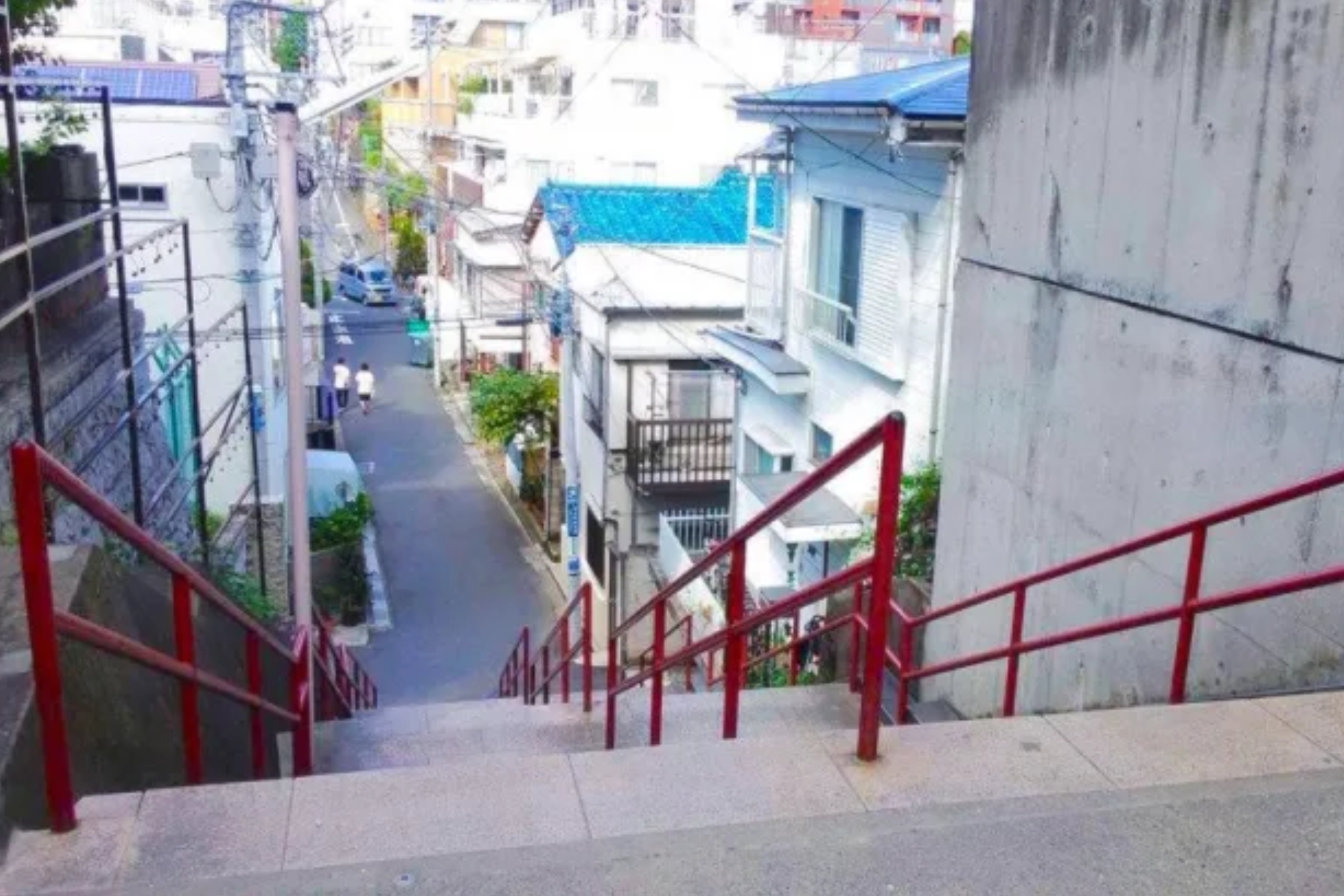
There are few locations in the entire landscape of anime pilgrimage travel that carry the specific emotional weight of the Suga Shrine staircase in the Yotsuya neighborhood of Shinjuku, Tokyo — the exact flight of stairs where Taki and Mitsuha finally find each other in the climactic final scene of Makoto Shinkai’s Your Name, the 2016 animated film that became the highest-grossing anime film in history at the time of its release and that reduced audiences around the world to tears with the specific romantic tragedy of its time-crossing love story. The staircase in the film is depicted with the extraordinary attention to architectural detail that Shinkai and his studio CoMix Wave Films are celebrated for — the specific angle of the steps, the specific quality of the light filtering through the surrounding trees, the specific urban backdrop visible from the top of the stairs — all rendered so accurately from the actual Suga Shrine that the real location is immediately recognizable to any viewer who has seen the film.
Fans who visit the Suga Shrine staircase report one of the most emotionally overwhelming experiences available in any pilgrimage destination — the specific shock of recognition when the real staircase appears exactly as it does in the film, the involuntary recall of the scene and the feelings it originally produced, and the specific quality of grief and joy that standing in the exact physical space where two fictional characters finally found each other after crossing the boundaries of time and memory creates in the person who loves the story enough to have traveled here. Many visitors report crying upon first seeing the stairs — not because the stairs themselves are dramatic or imposing, because they are actually quite ordinary in themselves, but because the emotional associations attached to them by the film are so powerful that the sight of the real thing reactivates them completely. The shrine is open to visitors year-round and is located a short walk from Yotsuya-sanchome Station on the Tokyo Metro Marunouchi Line — and the best time to visit is early morning, when the light quality most closely resembles the golden-hour illumination of the film’s climactic scene and the relatively small number of other visitors allows the specific contemplative experience that this particular pilgrimage most deserves.
The Kamakura Enoden Railway Crossing — Slam Dunk Opening Theme
The Kamakura Enoden railway crossing in Kamakura, Kanagawa Prefecture — specifically the level crossing near Kamakura High School Station where the single-track Enoden line passes through a residential street against the backdrop of the Pacific Ocean — has become one of the most photographed and most visited pilgrimage destinations in all of anime tourism, almost entirely on the strength of a single animated sequence: the opening credits of the 1993 Slam Dunk television series, in which the main characters are depicted at this exact crossing with the ocean visible behind them. The specific image of the crossing, the Enoden train, the ocean, and the mountain backdrop — rendered faithfully from the real location by the animators whose reference photography captured the specific visual character of this particular stretch of the Shonan coastline — has become one of the most recognizable images in all of anime history and the inspiration for one of the most enduring pilgrimage traditions in anime fan culture.
The experience of visiting the Kamakura Enoden crossing is the specific experience of seeing an animated image become physically real — the moment when the train appears from around the corner and passes through the crossing with the ocean glittering behind it is the moment that fans describe as the most immediate and the most visceral confirmation of the pilgrimage’s purpose, when the screen memory and the physical reality overlap completely and the specific emotion of recognition combines with the broader beauty of the actual Shonan coast location to create something that exceeds both the animated reference and the expectation of the visit. The crossing is accessible from Kamakura High School Station on the Enoden line, and the area has become so popular with anime fans that local signs in multiple languages acknowledge the crossing’s status as a pilgrimage destination while requesting that visitors respect the privacy and daily lives of the local residents who actually live alongside this now-famous stretch of track. The 2022 Slam Dunk film, The First Slam Dunk, re-ignited interest in the crossing and produced a new wave of pilgrimage visitors whose presence confirmed that thirty years after the original series, the emotional connection between fans and this specific stretch of railway has not diminished but has been renewed for an entirely new generation.
Jiufen Old Street — Spirited Away (2001)
The mountain village of Jiufen in New Taipei City, Taiwan — its narrow, lantern-lit stone staircases climbing between old tea houses and traditional shops on the steep hillside above the Pacific Ocean — has been identified by generations of Studio Ghibli fans as one of the primary real-world inspirations for the spirit town of the 2001 masterpiece Spirited Away, Hayao Miyazaki’s Academy Award-winning animated film about a young girl named Chihiro who becomes trapped in a world of spirits and must work in a bathhouse to save her parents. The specific visual parallels between Jiufen and the film’s spirit town — the steep red-lit staircase, the traditional architecture with wooden balconies overlooking the ocean, the narrow alleys between closely packed buildings, and the specific atmospheric quality of the hillside village in evening light when the lanterns are lit — are striking enough that the comparison has become one of the most widely referenced examples of anime location tourism.
The comparison between Jiufen and Spirited Away’s spirit town is a subject of some nuance — Studio Ghibli has officially stated that Spirited Away’s setting was not directly based on any single real location, and Miyazaki himself has cited various inspirations from Japanese towns and his own imagination. However, the visual similarity between Jiufen and the film’s environment is undeniable enough that the experience of walking through Jiufen’s stone-stepped alleyways in the evening, when the red lanterns illuminate the narrow passages and the sound of traditional music drifts from the tea houses and the ocean glitters below, is one of the most atmospherically resonant anime pilgrimage experiences available anywhere in Asia regardless of the precise nature of the creative relationship between the place and the film. The Jiufen visit is the experience of inhabiting the atmosphere that inspired or parallels one of the most beloved animated films ever made — and the travel and tourism experience of arriving at the village in the late afternoon and staying through the evening, when the lantern light transforms the already beautiful hillside into something that feels genuinely magical, is one that fans who make the journey consistently describe as one of the most memorable experiences of their lives.
Gorillaz and Totoro: The Catbus Stop — My Neighbor Totoro (1988)
The Sayama Hills region of Saitama Prefecture — specifically the areas around Tokorozawa City that include the wooded hillsides, the rural rice paddies, the old farmhouses with their distinctive thatched roofs, and the narrow country lanes bordered by ancient camphor trees — served as the primary landscape inspiration for My Neighbor Totoro, Hayao Miyazaki’s 1988 animated masterpiece about two young sisters who encounter the giant forest spirit Totoro in the rural Japan of the 1950s. The specific character of this landscape — the specific quality of the late-summer light through the forest canopy, the damp smell of the paddies, the ancient trees whose size and age suggest the deep-rooted natural spirits that Miyazaki’s film imagines inhabiting them — is rendered in the film with the specific fidelity of an artist who loved the actual place deeply and wanted to preserve its character on screen against the encroachment of the suburban development that was progressively transforming this landscape even as the film was being made.
The Totoro Forest Project — the real-world conservation initiative that the Studio Ghibli team helped establish to protect the actual Sayama Hills woodland from development — is one of the most direct and most moving examples of the relationship between a beloved anime and the real world whose preservation the animation’s beauty helped inspire, and a visit to the Sayama Hills is simultaneously an anime pilgrimage and a visit to an actively conserved natural landscape whose continued existence is partly the result of the love that millions of fans around the world directed toward the animated version of its specific character. The Kurosuke House — a real traditional farmhouse in the area that was used as reference material for the Kusakabe family home in the film and that has been preserved as a historic property — provides the most direct architectural pilgrimage experience available in the Totoro landscape, while the broader exploration of the wooded paths and the rice paddy edges of the Sayama Hills provides the atmospheric immersion in the film’s specific natural environment that is the most authentic available experience of the landscape Miyazaki loved well enough to make immortal.
The Washing Place Steps — Whisper of the Heart (1995)
The Seiseki-Sakuragaoka neighborhood in Tama City, Tokyo — with its hilly residential streets, its sloping lanes between traditional houses, the specific views of the Tama River valley from the higher elevations, and the specific atmospheric quality of an older suburban Tokyo neighborhood that the pressures of modernization have not entirely transformed — served as the primary setting for Yoshifumi Kondo’s 1995 Studio Ghibli film Whisper of the Heart, the coming-of-age story of a young aspiring writer named Shizuku who falls in love with a violin maker’s apprentice named Seiji in the specific quiet of a neighborhood whose character the film rendered with exceptional affection and exceptional accuracy. The film is unique in the anime pilgrimage landscape for the degree to which it depicts a real, existing Tokyo neighborhood with such faithful attention to the specific architecture, the specific topography, and the specific atmosphere of the actual place that visiting Seiseki-Sakuragaoka is one of the most immersive real-world anime location experiences available anywhere in Japan.
The specific locations that Whisper of the Heart fans seek out in Seiseki-Sakuragaoka include the Murasaki Bridge, the slope where Shizuku runs to confess her feelings to Seiji, the specific view of the Tama River valley that appears in multiple scenes, and the overall atmosphere of a neighborhood that feels genuinely apart from the pace and the scale of central Tokyo in a way that the film captures so perfectly that fans who know the film feel they already know the place before they arrive. The community of Tama City has warmly embraced the film’s legacy — local businesses display Totoro and Shizuku imagery, the train station has specific Whisper of the Heart references, and the overall relationship between the neighborhood and its anime heritage is one of the most positive and most mutually respectful examples of the relationship between anime pilgrimage tourism and the local communities that host it available anywhere in Japan.
Fushimi Inari Shrine — Memoirs of a Geisha (2005) and Numerous Anime
The Fushimi Inari Taisha shrine in Kyoto — whose thousands of vermilion torii gates create the specific visual of the tunnel of red arches climbing the forested hillside that has become one of the most photographed locations in all of Japan — has served as a filming and animation reference location for so many productions that its pilgrimage significance extends across multiple fan communities simultaneously, from the Hollywood productions that have used its visual drama as the defining image of traditional Japan through the anime series and films whose animators have used its specific architectural character as the reference for the spirit gate imagery that appears in countless fantasy anime. For the fans of Memoirs of a Geisha, the 2005 Rob Marshall film whose opening Kyoto scenes used the shrine’s dramatic gate tunnels as a visual metaphor for the protagonist’s journey, the shrine is a specific cinematic pilgrimage. For anime fans, it is the real-world equivalent of the spirit world gate imagery that Spirited Away, Inuyasha, and dozens of other productions have used as the visual language of the boundary between the human world and the spirit realm.
The experience of walking through the Fushimi Inari torii gate tunnels — especially in the early morning before the crowds arrive or in the late evening when the gates are lit from below and the forest around them is dark and quiet — is one of the most genuinely atmospheric and most visually extraordinary experiences available in all of Japanese travel, and the specific emotional resonance of walking through gates whose image you know from beloved films and series adds the specific fan dimension of recognition and connection to what is already one of the most beautiful walks in Asia. The full hike to the summit of Mount Inari through the thousands of gates takes approximately two to three hours and traverses the full range of the shrine complex whose different sections and different atmospheric qualities at different heights and different times of day create the experience of a genuinely varied journey rather than the linear procession that the well-known lower gates suggest.
Ghibli Museum and Beyond: Studio Ghibli’s Dedicated Fan Spaces
The Ghibli Museum in Mitaka, Tokyo — the permanent exhibition space dedicated to the art, the animation process, and the creative world of Studio Ghibli that opened in 2001 and has remained one of the most beloved and most carefully controlled fan destinations in all of Japan — occupies a unique position in the anime pilgrimage landscape as a space that was created specifically for fans rather than as a real-world location that predated its anime significance. The museum’s specific character — the original short films shown nowhere else in the world, the permanent exhibition of original Ghibli artwork and production materials, the Catbus room available only to children, the Robot Soldier from Castle in the Sky standing guard on the rooftop garden — creates the specific experience of immersion in the world of the studio rather than in the world of any individual film, and the strict reservation system whose advance booking requirement several months ahead of visit reflects the demand that a museum whose capacity is deliberately limited to preserve the quality of the experience has been unable to satisfy since its opening.
The Universal Studios Japan Wizarding World of Harry Potter in Osaka — and its Mario Kart and Nintendo areas — represents the expansion of the dedicated fan experience space into the theme park format whose scale and whose technological sophistication create the most immersive possible recreation of beloved fictional worlds in a designed, constructed space rather than a discovered real location. The experience of riding the Harry Potter and the Forbidden Journey attraction within the architectural reproduction of Hogwarts Castle is the most complete available physical immersion in a fictional world created for entertainment rather than discovered in the real geography that pre-existed the fiction, and the quality of the design and the execution of these spaces within the theme park context has made them among the most visited and most emotionally significant destinations in the entire travel and tourism landscape of dedicated fan experiences available in Asia.
Conclusion
The fan pilgrimage to the real locations of beloved anime and movies is one of the most personally meaningful and most emotionally specific travel experiences available in any traveler’s repertoire — a form of travel whose motivation is not the conventional one of seeing a famous landmark or experiencing a different culture but the specific, deeply personal one of closing the distance between the screen and the world, of standing in the physical space where an imagined moment was placed, and of feeling in that standing the specific quality of connection between the story that shaped you and the earth that supports you. The Suga Shrine stairs where Taki and Mitsuha finally found each other, the Kamakura crossing where the Slam Dunk characters stood against the ocean background of their opening story, the lantern-lit lanes of Jiufen that breathe the same atmosphere as Chihiro’s spirit world, the Sayama Hills where Totoro still seems possible in the ancient forest’s shadows — these are places whose significance to the millions of fans who visit them annually is as genuine, as personally meaningful, and as emotionally resonant as any landscape on earth. The travel and tourism industry has increasingly recognized this reality, and the infrastructure of anime pilgrimage tourism — the maps, the guides, the local community celebrations of their anime heritage, and the growing international awareness of Japan’s specific role as the world capital of animated storytelling — continues to develop in ways that make the fan pilgrimage more accessible, more richly supported, and more deeply rewarding for every traveler who makes the journey not because a guidebook told them to but because a story they love made a specific place feel like home before they ever arrived there.